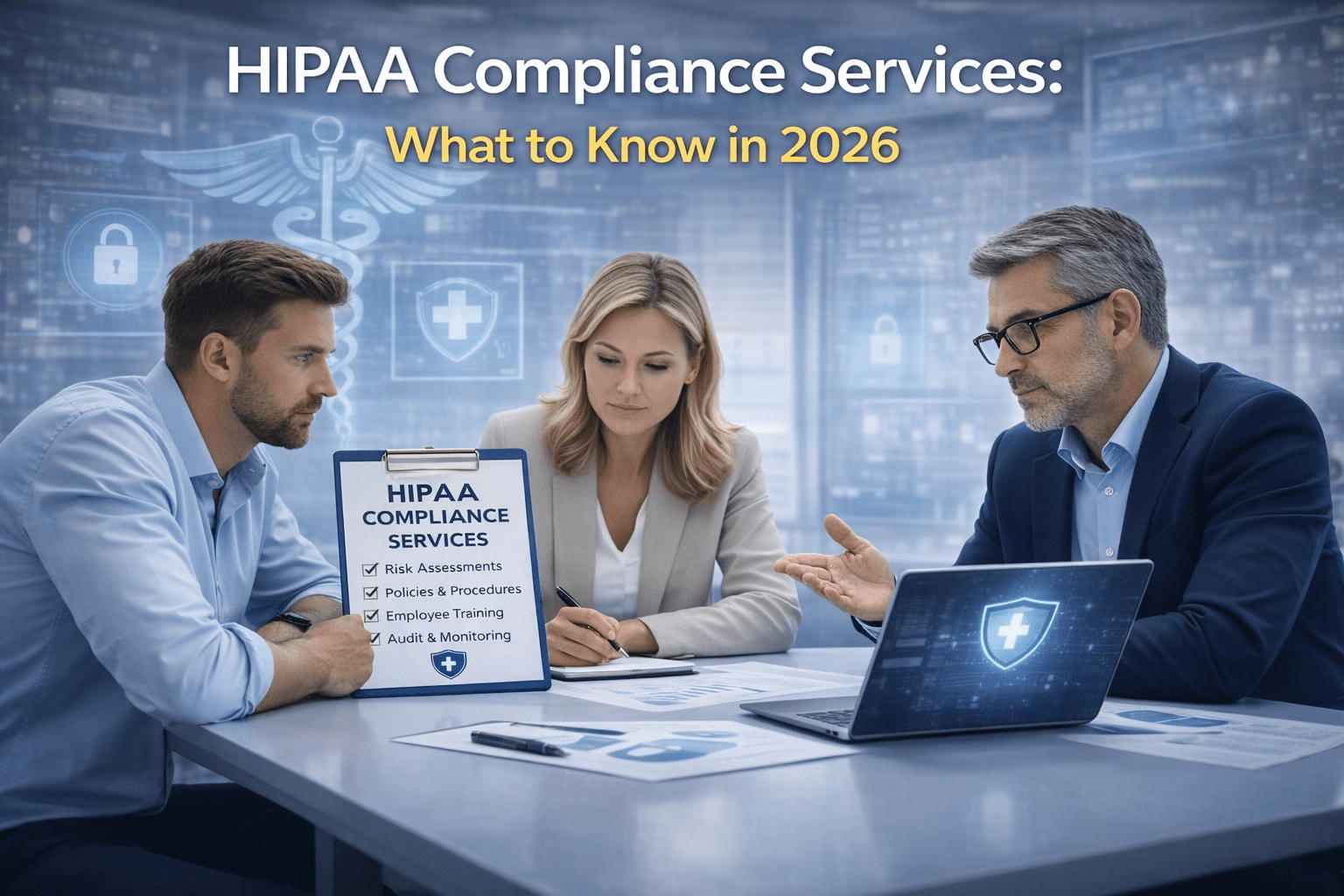
HIPAA compliance is mandatory for any organization that creates, receives, stores, or transmits protected health information (PHI). Violations can result in fines ranging from $141 to $2,134,831 per violation, with annual maximums exceeding $2 million per violation category. Beyond fines, a HIPAA breach can destroy patient trust and trigger investigations that consume months of staff time.
If your organization handles health data — whether you’re a healthcare provider, a nonprofit serving vulnerable populations, a business associate processing claims, or a tech company building health applications — this guide covers what HIPAA compliance actually requires and how to get there without building an entire security department.
Who Needs HIPAA Compliance
HIPAA applies more broadly than most organizations realize. The two main categories are covered entities (healthcare providers, health plans, and healthcare clearinghouses) and business associates (any organization that handles PHI on behalf of a covered entity).
That second category catches many organizations off guard. If you’re a nonprofit that manages health records for a community health program, you likely need HIPAA compliance. If you’re a SaaS company that processes patient scheduling data, you’re a business associate. If you provide IT services to a clinic, you’re a business associate.
The test is simple: does your organization touch PHI in any form? If yes, HIPAA applies.
The Three HIPAA Rules You Must Address
The Privacy Rule establishes standards for how PHI can be used and disclosed. It defines patient rights, sets limits on who can access health information, and requires organizations to designate a Privacy Officer and implement privacy policies. Key requirements include providing patients with a Notice of Privacy Practices, obtaining authorization before certain disclosures, and establishing minimum necessary standards for PHI access.
The Security Rule focuses specifically on electronic PHI (ePHI) and requires administrative, physical, and technical safeguards. Administrative safeguards include risk assessments, workforce training, and contingency planning. Physical safeguards cover facility access controls and workstation security. Technical safeguards address access controls, audit controls, integrity controls, and transmission security. The Security Rule is where most compliance work lives, and it’s where organizations without dedicated security staff struggle most.
The Breach Notification Rule requires organizations to notify affected individuals, the Department of Health and Human Services (HHS), and in some cases the media, when a breach of unsecured PHI occurs. Notifications must happen within 60 days of discovery. Having incident response procedures in place before a breach occurs is essential — figuring out the notification process during an active incident is a recipe for regulatory violations.
What a HIPAA Compliance Program Actually Looks Like
A functional HIPAA compliance program isn’t a binder of policies that sits on a shelf. It’s an active, ongoing program with several core components:
Risk Assessment. HIPAA requires a thorough risk assessment that identifies threats and vulnerabilities to ePHI. This isn’t a one-time activity — it should be conducted annually and whenever significant changes occur in your environment. The risk assessment drives all other compliance activities by identifying where your gaps are.
Policies and Procedures. You need documented policies covering access control, data handling, encryption, incident response, business associate agreements, training, and more. These policies need to reflect what your organization actually does, not generic templates downloaded from the internet.
Business Associate Agreements (BAAs). Every vendor that accesses PHI must sign a BAA. This is non-negotiable. The BAA establishes each party’s responsibilities for protecting PHI and reporting breaches. Managing BAAs across your vendor ecosystem requires systematic tracking.
Workforce Training. Every employee who touches PHI needs HIPAA training at onboarding and annually thereafter. Training should cover what PHI is, how to handle it, how to report incidents, and what the consequences of violations are.
Technical Controls. Encryption at rest and in transit, access controls based on role and need, audit logging, automatic session timeouts, multi-factor authentication, and secure data disposal. The specific controls depend on your risk assessment findings.
Incident Response. A documented, tested plan for detecting, containing, investigating, and reporting breaches. This includes breach notification procedures that comply with the 60-day timeline.
HIPAA for Nonprofits: The Unique Challenge
Nonprofits serving communities often handle sensitive health data through social services programs, community health initiatives, behavioral health services, or partnerships with healthcare providers. California’s Data Exchange Framework (DXF) adds another layer — health and social services organizations participating in data exchange must meet specific security and privacy requirements.
The challenge for nonprofits is achieving HIPAA compliance with limited budgets and lean teams. Most nonprofits don’t have IT security staff, let alone compliance specialists. Yet the regulatory requirements are identical to those facing a large hospital system.
This is where a proportionate approach matters. HIPAA doesn’t prescribe specific technologies — it requires “reasonable and appropriate” safeguards based on your organization’s size, complexity, and capabilities. A 50-person nonprofit doesn’t need the same controls as a 5,000-person health system. But it does need a structured program that addresses the core requirements.
A vCISO or CISO-as-a-Service engagement is often the most practical path for nonprofits. The provider brings HIPAA expertise, conducts the risk assessment, builds the policies, implements controls, and manages ongoing compliance — all within a predictable monthly budget rather than a six-figure internal hire.
Common HIPAA Compliance Mistakes
Treating compliance as a one-time project. HIPAA is an ongoing obligation. Risk assessments need annual updates. Policies need regular review. Training needs annual renewal. Organizations that “get compliant” and then stop investing will drift out of compliance.
Ignoring business associates. Your security is only as strong as your weakest vendor. If a business associate handling your PHI has poor security practices and gets breached, you’re on the hook for notification and remediation. BAA management and vendor risk assessment are critical.
Generic policies that don’t match reality. Auditors and investigators look for evidence that policies are implemented, not just documented. If your encryption policy says you encrypt all ePHI at rest but your database isn’t encrypted, the policy makes things worse — it’s evidence that you knew the requirement and didn’t follow it.
No incident response testing. Having an incident response plan is required. But if your team has never practiced it, the plan is theoretical. Tabletop exercises that walk through breach scenarios prepare your team to respond effectively under pressure.
Assuming small size means low risk. HHS investigates organizations of all sizes. Small nonprofits and clinics have received significant fines. Size doesn’t exempt you from compliance — it just means your controls should be proportionate.
How HIPAA Compliance Services Work
Professional HIPAA compliance services typically follow a structured approach. The provider begins with a risk assessment to identify gaps, then builds a remediation plan prioritized by risk severity. Policy development, technical control implementation, training programs, and BAA management follow. Ongoing monitoring and annual reassessments keep the program current.
The best providers don’t just hand you a report — they implement the changes. For organizations without internal security staff, this distinction is critical. Advisory-only providers leave you with a list of problems and no capacity to fix them. Implementation-focused providers build the program and run it alongside your team.
How CISOSHARE Supports HIPAA Compliance
CISOSHARE’s HIPAA compliance services help organizations handling protected health information meet requirements through their proven methodology. Their approach covers comprehensive risk assessments aligned to HIPAA requirements, policy and procedure development tailored to your organization, technical control implementation and validation, workforce training programs, business associate agreement management, and incident response planning with tabletop exercises.
For nonprofits navigating both HIPAA and California’s DXF requirements, CISOSHARE brings specific experience in aligning compliance programs to multiple mandates simultaneously — avoiding the duplication and cost of treating each framework separately.
Their CISO-as-a-Service model provides the strategic leader plus the team to handle execution, so your staff can focus on delivering services while CISOSHARE manages the compliance program. With their learning-and-teaching approach, they build your internal team’s understanding of HIPAA over time.
FAQ
How much do HIPAA compliance services cost?
Professional HIPAA compliance services typically range from $3,000 to $10,000/month for ongoing management, or $15,000 to $50,000 for a one-time assessment and remediation project. Costs vary based on organization size and current maturity.
How long does it take to become HIPAA compliant?
For organizations starting from scratch, expect 3–6 months to establish a functional compliance program. Organizations with some existing practices in place can see meaningful progress in 60–90 days.
Is HIPAA compliance the same as HIPAA certification?
No. There is no official HIPAA certification issued by HHS. Organizations can undergo third-party assessments to validate compliance, but HIPAA compliance is self-attested and verified through audits and investigations.
What happens if we have a HIPAA breach?
You must notify affected individuals within 60 days, report to HHS, and if 500+ individuals are affected, notify local media. Having an incident response plan in place before a breach occurs is essential for meeting these timelines.
Do nonprofits need HIPAA compliance?
If your nonprofit handles protected health information in any form, yes. Many nonprofits providing social services, behavioral health, or community health programs fall under HIPAA requirements as covered entities or business associates.
CISOSHARE helps organizations build practical HIPAA compliance programs. Schedule a call to discuss your compliance needs.